Detect
When the vehicle falls, gravity moves the copper pendulum towards a fixed copper contact.
 Automotive
 Automotive case study · Group project
Diploma Automobile Engineering · 2018–2019
A low-cost electromechanical safety prototype designed to stop a two- or three-wheeler's engine after the vehicle falls.
Academic prototype—not a certified commercial safety product.
The problem
The team explored a simple retrofit approach for vehicles without a dedicated electronic rollover-control system.
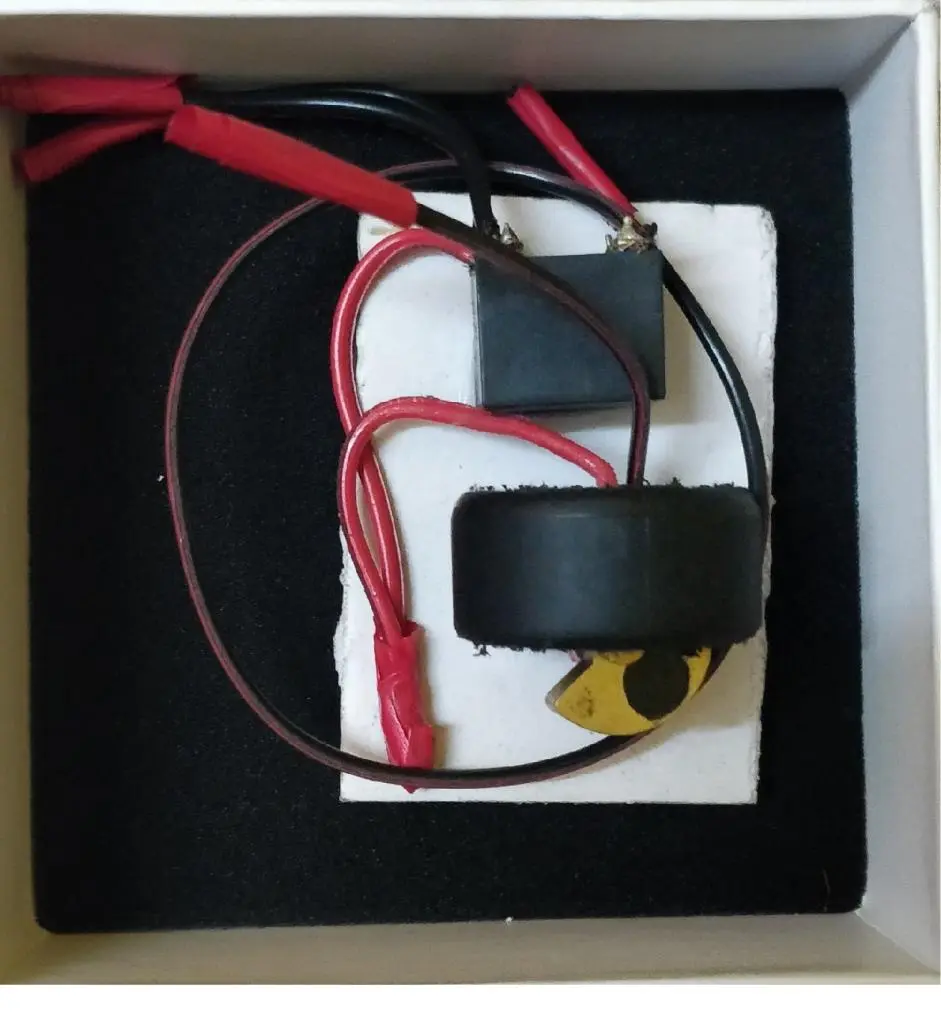
Original prototype
The photograph is reproduced from the original 2018–2019 group project report. Detailed circuit material is intentionally not republished because the report recorded a patent filing process.
Operating principle
The concept used a movable copper pendulum as the sensing element, avoiding reliance on an engine control module in the demonstrated prototype.
When the vehicle falls, gravity moves the copper pendulum towards a fixed copper contact.
The completed contact supplies the 12 V relay used in the prototype circuit.
The relay changes the electrical path and interrupts the engine ignition supply.
Once upright, the pendulum disconnects and the relay returns to its normal condition for restarting.
Prototype build
The report recorded a total prototype component cost of ₹280 during the 2018–2019 academic year. This is a historical project cost, not a current manufacturing estimate.
Testing & outcome
The project report states that the prototype was used for two months and tested through 20 fall events. It stopped the engine when the bike fell without shutting it down during the reported normal, hill or off-road use.
Development status
Project credits
Pimpri Chinchwad Polytechnic · Department of Automobile Engineering
Guided by Prof. P. S. Katkar
Project team member
Project team member
Project team member
Project team member
Patent noteThe original project report recorded the concept as being in the process of patent filing. No patent ownership or granted status is claimed on this page.
Explore more work